game writer, zine author, video artist, comic writer, digital/prop artist and digital product entreprenerd
I make character-focused, narrative-driven game art, cartoons, video art, films, prop art, digital systems art, publishing and stories with a strong and unique voice.
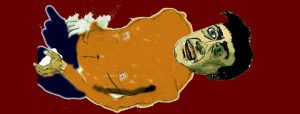
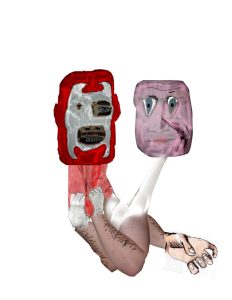
I built my creative practice around the idea that small-scale, independent art could still feel expansive, emotionally charged, and culturally resonant. Across writing, illustration, speculative fiction, games, film concepts, zines, and digital media, I explored fractured identities, existential tension, strange systems, and the uneasy relationship between technology, memory, and human connection. My work blended macabre imagery, dark humour, vulnerability, and philosophical experimentation with a handmade, DIY sensibility shaped by underground comics, indie games, internet subcultures, and alternative cinema.
I approached creation as both worldbuilding and excavation. Rather than separating mediums, I treated each project as part of a larger interconnected creative ecosystem in which poems, scripts, visual designs, conversations, and interactive ideas informed one another. I was particularly drawn to intimate, auteur-driven production models where small teams — or even solitary creators — could produce deeply personal work unconstrained by traditional industry expectations.
Through self-directed experimentation, long-form writing, and multidisciplinary development, I cultivated a body of work concerned with atmosphere, emotional intensity, and curiosity. My projects consistently examined failure, obsession, alienation, wonder, and survival while seeking moments of connection, catharsis, and meaning within strange imagined worlds.
AUTHOR
I write speculative fiction, novellas and short stories built around strange people, social systems and worlds that don’t quite behave themselves. My fiction moves between science fiction, horror, dark comedy and literary experimentation, with an interest in character, outsider perspectives and the collision between everyday life and impossible situations. I work across traditional publishing, independent releases and fiction that can grow into larger worlds.
GAME WRITER
I develop games around strong mechanics, peculiar worlds and narrative systems. My influences stretch from the PS1 and Neo Geo eras through Another World, Close Combat, Lemmings, Syphon Filter and Freedom Force to contemporary independent studios and games such as Limbo, Bramble, TU Studio, VideoCult, Jxiidxii, Juhana Myllys and Kevin Lai, Hemisphere, exosyphen, Amanita Design and Triband.
The work ranges from cinematic platform adventures and narrative games to strategy/simulation, tabletop design, chaotic competitive games and new hybrids. I’m interested in what happens when mechanics and genres that shouldn’t necessarily belong together are made to coexist — and when the player’s experience of a world becomes as important as the story being told.
VIDEO ARTIST
My moving-image work sits somewhere between narrative filmmaking, video art and experimentation. I develop screenplays, short films, machinima, performance and concept pieces, using limitations as part of the form rather than something to disguise. I’m interested in unusual structures, strong performances, digital imagery and finding inexpensive ways to make work that still feels authored, cinematic and personal.
COMIC WRITER
Comics give me a laboratory for combining writing, drawing, rhythm and design. I write short comics, scripts and longer-form concepts while developing my own sequential-art practice. I’m particularly interested in the page itself: panel composition, negative space, changes in rhythm, silent sequences and the different ways words and images can contradict or reinforce one another.
DIGITAL / PROP ARTIST
I make digital art, physical objects, creatures, props and experimental visual work. This includes illustration, character and creature development, miniature painting, 3D and physical fabrication, and artwork developed as part of larger fictional worlds.
I like moving between screen and object: something might begin as a sketch, become a digital design, turn into a physical prop and eventually appear inside a film, comic or game. Across all five modes, that’s the connecting idea: different media aren’t separate boxes — they’re different ways of building and exploring worlds.
What if art = systems + stories + comics + essay books + games + toys + satire + weird cult craft + machinima as a form + TV as DIY internet culture?
Studio Name = “World.exe: many small cool things”
This is the Oney/Triband/Svedäng/serendipity point/gracious films/artscum/Ghost Story/SLG/Megagon pattern instead of AAA.
My favourite writers are: Stephen King, Joe Penhall, Don Hertzfeldt, David Cronenberg, Shane Carruth, Peter Chung, Park Chan-wook, Noah Pink, Eric Chahi, Gideon Raff, Sam Kieth, Jhonen Vasquez, Chris O’Neill (OneyNG), Greg Egan, David Webb Peoples, S. S. Wilson, Al Gordon, Juhana Myllys, Hal Hartley, Pat Mills, Lars Von Trier.
I’ve been building my creative project, world.exe, for about two years. Most of that time has been spent writing, learning new skills, and creating illustrations and cartoons. I mainly work in Photoshop and GIMP (using a mouse), and I’m gradually adding game development with GameMaker and environment painting to my skill set.
My long-term goal is to release eight indie games in late 2028. Until then I’m focusing on improving my craft rather than trying to rush commercial releases.
This year I’m planning to release around 15–22 smaller creative projects to establish a body of work and build an audience. Next year I plan to scale back to around seven releases so I can spend much more time on skill-building.
I’m a speculative fiction writer, video artist and digital systems designer.
I write mostly cerebral, voice-driven, character-centred stories with terminally introverted characters and weirdos with their own fixations and machinations. Reacting to alien backgrounds, and attempting to co-exist without dying violent deaths. Post-punk grimdark, often with b-movie homage settings – but driven by intellectual characters and complex systems.
My creative journey began in the unlikeliest of places, the back of a truck.
When I was sixteen my dad helped me get a job assisting the driver on his rounds and unloading and reloading the truck – to keep me out of trouble. I was so unfathomably bored that I was motivated to figure out what to do with my life.
At a careers expo I discovered applied art.
Fast forward from 1999 to 2013, two degrees (one in creative writing with merit in short fiction and the other in art direction for short film and 2d animation) later, I began freelancing as a web developer, building a website for a school and several local artists. That wasn’t much fun – but it took two years to get through, so then I switched to being a scriptwriting coach.
Five years later, 2020-2023, I focused on building my technical skills, learning Game Maker Studio after bits and pieces of JavaScript, C++ and Python, studying video game environment art with Gimp, and experimenting with machinima and video projects for Vimeo. I also continued writing short fiction and comics, building software art, and designing tabletop games.
Since 2023 I’ve been developing my creative practice across video art, storytelling, indie game development, and software art. My portfolio is the result of this three-year period of focused making, experimentation, and worldbuilding.
In November of 2026, I will be releasing all of the most finished projects I’ve been working on which is 15 pieces, including a digital collectable card game demo and the Shards of the Wall film campaign. One of the 15 is a giant zine of 16 coffee-fueled conversations with nerd culture professionals and a few collectors from around the world in a variety of niche industries. I’ve been working on this zine for three years, it releases in October-ish.
The other 12 projects are: a choreography video, a short narrative film on video, lore drop 1, Dungeon of Cats TTRPG, an indie video game (with open-source prototype version), Machinima season 1, open-source theatre script for sale via Etsy, research book 1 self-published via KDP (at 300pgs), some software art via itch, my first self-published literary SciFi novella and 2 literary micro-budget feature film screenplays.
4 days into our 8-day indie video game jam – Dungeon Crawler Jam 2024. By day four we had to drop out because we kept losing coders.
1. Illuxion
Illuxion is a thirty-year collection of poetry exploring despair, frustration, absurdity, memory, alienation, and philosophical unease through a voice that moves between confessional intensity and surreal thought experiments. The work combines macabre imagery, emotional volatility, and introspective observation, creating an atmosphere that is simultaneously personal and mythic.
Rather than following a single style, the collection documents the evolution of a creative voice over decades. Some poems are raw and confrontational, while others drift into dream logic, fragmented narrative, or existential reflection. Together they form a long-form emotional archive examining identity, collapse, imagination, and survival through language.
currently finishing the cover art to self-publish, aiming for Barnes and Noble.
2. DfP — Novella 1
DfP is the opening entry in a larger interconnected fictional universe blending psychological horror, existential tension, speculative fiction, and philosophical unease. The novella explores distorted perceptions of reality, fractured identity, and the instability of meaning through an atmosphere of escalating uncertainty.
The project focuses less on traditional genre conventions and more on emotional immersion, symbolic imagery, and thematic tension. Characters navigate environments shaped as much by internal collapse as external events, creating a world that feels intimate, oppressive, and difficult to fully comprehend. The novella acts as both a self-contained story and an entry point into a much larger body of connected work.
It’s Literary Cosmic Noir, full title: “Destined for Perfection: book 1 of 4” querying with small press and agents.
3. Theatre Script — aiming for release open-source via my Etsy store:
This theatre work combines monologue-driven psychological intensity with philosophical reflection and emotional confrontation. The script explores identity, memory, artistic obsession, and the tension between performance and authenticity through intimate dialogue and emotionally charged scenes.
Designed for live performance rather than spectacle, the project prioritises atmosphere, language, and actor presence. The work sits somewhere between psychological drama, experimental theatre, and existential character study, drawing attention to the emotional instability and contradictions embedded within contemporary life.
4. Short Film 1
Short Film 1 is an experimental cinematic project focused on atmosphere, emotional tension, and philosophical subtext rather than conventional narrative structure. The film uses fragmented imagery, reflective monologues, and symbolic visual language to create a feeling of psychological dislocation and introspection.
The project functions both as a standalone work and as part of a broader interconnected creative universe spanning prose, theatre, and film. Themes of memory, isolation, identity, and existential uncertainty recur throughout the piece, creating a mood that is simultaneously intimate and unsettling.
currently in script development and pre-production, producing it myself, i may direct.
5. anthology of weird Comic
This reinterpretation of Beauty and the Beast transforms the familiar framework into a darker and more psychologically complex exploration of obsession, transformation, emotional dependency, and distorted humanity. Rather than retelling the original fairy tale directly, the comic uses its imagery and symbolic structure as a foundation for something stranger and more unsettling.
The visual storytelling emphasises atmosphere, emotional expression, and symbolic environments, creating a world suspended between fantasy, horror, and introspective drama. The comic examines the tension between external monstrosity and internal collapse while questioning the nature of empathy, identity, and desire.
webcomic publishing soon on this website.
6. “3 later night stories” Comic
is a speculative comic exploring the psychological and social consequences of altered perception, distorted time, and escapist technologies. The project blends surreal imagery, philosophical questioning, and dark humour to create a world where time itself becomes unstable.
Rather than focusing purely on science-fiction mechanics, the comic examines an anthology of moody emotional responses to stagnation, anxiety, nostalgia, and the human desire to escape uncomfortable realities.
aiming for a Image Comics submission.
7. lore drop 1 – “Lucid Dragons”
The novella adaptation of Time Pills real title: “Lucid Dragons”, expands the ideas into a broader psychological and philosophical narrative.
The longer format allows for deeper exploration of character interiority, worldbuilding, and existential tension while retaining the surreal atmosphere and conceptual focus of the original concept.
The project examines how altered experiences of time affect memory, identity, ambition, and emotional connection. The novella develops a more immersive and psychologically layered version of the world introduced in the original work.
Lore drop 1 for gumroad, illustrated lore drop 1 + lore drop 2 open source via patreon.
8. Screenplay Expansion of the Short Film Monologue
This screenplay expands upon the monologue and thematic core of Short Film 1, transforming a contained emotional piece into a broader cinematic narrative. The screenplay retains the introspective and philosophical atmosphere of the original while introducing additional environments, characters, and dramatic tensions.
The work explores alienation, identity fragmentation, artistic obsession, and existential anxiety through emotionally driven scenes and symbolic visual storytelling. Rather than abandoning the original experimental tone, the screenplay amplifies it into a more expansive psychological and cinematic experience.
In final draft mode before sending to stage32 and directors, to consult/collab.
9. Zine 1 — 400 Pages of Nerd Culture Conversations
Zine 1 is a large-scale conversational project documenting sixteen extended discussions centred around nerd culture, creativity, business, media, technology, philosophy, filmmaking, games, and artistic process. Built around coffee-fueled long-form conversations, the book captures the energy of spontaneous intellectual exploration and obsessive creative discussion.
Rather than presenting formal essays or interviews, the zine preserves the natural rhythm of conversation — tangents, debates, jokes, frustrations, theories, and moments of insight. The result is both a cultural time capsule and a document of contemporary creative thinking, reflecting the passions and anxieties of people attempting to build meaningful work inside modern nerd media culture.
10. Under the Surface – short story and radio short:
Under the Surface follows Mandy, a young woman caught between versions of herself — the life she has built in San Francisco, the possible future waiting in Brooklyn, and the fantasy of a connection she has discovered online. As she prepares to leave behind the city she loves, Mandy navigates relationships, loneliness, desire, and the strange intimacy of an internet romance with Laura, a woman she has never met but already feels deeply connected to.
Set against the shifting culture of the mid-2010s internet age, Mandy’s journey explores the fragile space between digital identity and physical reality. Through online quizzes, webcam conversations, social platforms, memories, music, and personal rituals, she searches for meaning and belonging while confronting the insecurities beneath the surface — her body, her choices, her fears, and the question of whether the person she imagines can ever exist outside the screen.
The radio adaptation of Under the Surface transforms Mandy’s internal world into an atmospheric audio experience, blending narration, sound, and digital-era textures to explore a generation learning to live between physical spaces and virtual ones. A story about love, self-image, technology, and transformation, it asks what happens when the versions of ourselves we create online begin to feel more real than the ones we inhabit?
11. Shards of the Wall
The Shards of the Wall is an experimental multiverse anthology exploring the stories that survive beyond death. At the centre of existence stands the Wall — a vast, living archive built from preserved consciousness, where unresolved minds become eternal worlds. When the Wall fractures, 21 dream-shards emerge: self-contained realities born from memory, trauma, desire, fear, and imagination. Each shard becomes a universe of its own, shifting between horror, science fiction, fantasy, satire, mythology, and surreal comedy.
From algorithm-driven dystopias and sentient spaceships to puppet cosmologies, cosmic westerns, cursed cartoons, and post-god dream wars, every shard is a reflection of the mind that created it. Guided by the mysterious Dreamer and the ancient warrior Rasmes, audiences explore a fractured afterlife where gods are inventions, stories become physical places, and every universe is fighting to understand why it exists. The Shards of the Wall is a journey through the infinite architecture of imagination — a place where every story wants to be told, and every memory has the power to become a world.
12. Zine 2 – FTR
Focus Thought Revolution is an open-source screenplay and experimental fiction project set in a small twilight zone where reality, myth, and counterculture collide. In the spirit of lost road movies, underground comics, and outsider cinema, the story follows a pair of post-beatnik wanderers travelling through an urban landscape in a stolen Volkswagen van. Their strange road-trip of picnics, conversations, and encounters drifts toward the fictional town of Nowheresville, New Zealand — a place where forgotten people, strange communities, and buried tensions converge.
What begins as a surreal adventure gradually transforms into something darker. After a night of grotesque violence, the story rewinds and explores the lives of those caught in its aftermath — revealing the humanity, dreams, and contradictions of the people who became victims. Focus Thought Revolution examines rebellion, identity, violence, and the stories society ignores, using the language of counterculture cinema and open-source storytelling to create a fragmented portrait of a world searching for meaning.
13. Potato
Zine 3
Potato is a tribute to the chaotic spirit of unfinished underground filmmaking — a love letter to the VHS era of schlock horror, backyard effects, and friends making something ridiculous because they could. Inspired by the forgotten energy of low-budget cult cinema, the project follows the legend of a giant satanic potato and the terrifying Killer Apes from Hell, embracing the strange charm of a movie that exists somewhere between horror, comedy, and a behind-the-scenes accident.
More than a finished film, Potato celebrates the process itself: the practical effects, homemade creativity, absurd ideas, and impossible ambitions that define outsider art. Featuring the infamous beach sequence where Cory is literally set on fire as part of the madness, the project captures the reckless joy of making art with whatever resources are available — a reminder that sometimes the weirdest creations become the most memorable.
14. LOJ – digital CCG + paper prototype: demo video
Legacy of Justice
Legacy of Justice is a digital collectable card game concept built from the foundations of tabletop experimentation and physical game design. Beginning as a paper prototype, the project explores how characters, abilities, strategy, and storytelling can evolve from simple cards into a living interactive system. The video demonstration documents the early development process, showing the handmade origins of a world designed to eventually expand into a digital experience.
Blending game mechanics with world-building, Legacy of Justice represents the World.exe approach to creation: ideas are tested physically, refined through play, and transformed across mediums. The project explores the relationship between stories and systems — where every card is not just a mechanic, but a piece of a larger mythology waiting to be discovered.
15. Screenplay: all the women I have ever loved
All the Women I Have Ever Loved is a reflective screenplay about a man looking back across the relationships that shaped his life. Through memories of lost loves, missed opportunities, moments of connection, and the people who changed him, he revisits the women who each represented a different chapter of his journey. What begins as a story about romance becomes an exploration of memory, regret, gratitude, and the invisible ways other people leave their mark on us.
As he reflects on the women he has loved, he discovers that each relationship taught him something not only about love, but about himself — his fears, his weaknesses, his hopes, and the person he was becoming. A meditation on intimacy and personal growth, the screenplay asks what remains after love ends, and how the people we lose continue to shape the person we carry forward.
16. Polydina’s own streaming channel prototype
17. Research project 1 of 5:
Story to World Transformation
Research Project is an investigation into the transformation of linear narrative into lived digital worlds. It explores the question: what happens when a story does not simply become a game adaptation, but undergoes a complete structural transformation into an interactive environment? Through theory, methodology, lived creative experience, and reflective analysis, the project develops a framework for understanding the point where expression becomes world.
The research proposes a series of design metrics for measuring this transformation — including translation, authorship, censorship, anthropology, expression, agency, function as form, habitation, economy, research, and intentional excess. Rather than treating interactivity as decoration, the project examines digital worlds as systems of discovery, consequence, persistence, and meaning. Combining ideas from game design, narrative theory, biomimicry, cultural systems, and artistic practice, Story to World Transformation investigates why adaptations fail, how they can evolve, and how artists can create environments where stories are not only observed, but inhabited.
18. Kinetic Orb Prop build 1
Kinetic Orb Prop
Kinetic Orb Prop is a physical design and fabrication experiment focused on creating a unique object that feels like it belongs to an imagined universe. Combining prop-making, mechanical thinking, and visual storytelling, the project explores how a single object can suggest history, function, and narrative.
Inspired by the tradition of science-fiction props, fantasy artefacts, and handmade world-building, the Kinetic Orb Prop demonstrates the World.exe approach of creating tangible fragments from fictional worlds. It is both an object and a story seed — a piece of a larger universe waiting to be discovered.
19. Dungeon of Cats (Tabletop Role-Playing Game)
Dungeon of Cats is a six-player improvisational comedy tabletop role-playing game where every dungeon encounter becomes a performance. Players navigate a whimsical dungeon by describing increasingly ridiculous actions, while the rest of the table acts as both audience and jury, voting on whether each attempt deserves to succeed. Instead of relying on complex rules or statistics, the game rewards creativity, commitment, and comedic timing, turning every turn into a miniature courtroom where the verdict shapes the story.
Designed to create memorable moments rather than optimise strategy, Dungeon of Cats transforms the traditional dungeon crawl into a collaborative comedy. The Game Master presents strange situations and heightens the absurdity, while players use a limited set of special actions to improvise their way through impossible problems. With quick turns, simple voting, and a focus on shared laughter, the game celebrates storytelling as performance, where success depends as much on entertaining the table as surviving the dungeon.
20. KDP 1 of 6: my first self-published novella “pixels vs symbols”
A story about a mish-mash of love, sexual experimentation among young people, entrepreneurship and hustling a business together when you have very limited funds, friends and resources. And the dubious morality that encroaches on enterprise directions, when success enables funds to not hold back progress and experimentation.
21. Machinima Season One
Machinima Season One explores the possibilities of using game engines and digital environments as a new form of independent filmmaking. Inspired by the early internet era of machinima creators, virtual storytelling, and DIY production, the project treats game worlds as miniature film studios where characters, cameras, and narratives can be created without traditional production limitations.
The series experiments with the intersection of cinema, games, animation, and online culture — using virtual spaces as stages for stories that could not exist in conventional filmmaking. Machinima Season One reflects the World.exe philosophy that technology is not just a tool for making art, but a medium with its own unique language.
22. Ham Winters Prototype:
Ham Winters is a 2D isometric video game prototype exploring character, world-building, and interactive storytelling through a handcrafted game development process. Built as an experiment in classic game design, the project investigates how small-scale mechanics, visual style, and personality can combine to create a memorable digital world.
The prototype represents the spirit of early independent games — where imagination, limitations, and experimentation often created the most distinctive experiences. Ham Winters is a study in building playable worlds from the ground up, combining design, storytelling, and technical exploration into one evolving creation.
2027 – 7 more projects and full-on Game Maker Studio self study (with 8 video games planned for release on itch in late 2028)
23. choreo video 1 of 3
Choreography Video
This choreography video is the first experiment in adapting game mechanics into the language of dance, video, and visual effects. Rather than illustrating a game directly, it isolates a single rule: performers wear T-shirts printed with logic-puzzle icons, and when two people wearing matching symbols make skin contact, a light bulb illuminates. The choreography is built around searching, pairing, and activating these connections, turning the performers into moving components within a simple interactive system.
The work deliberately begins with a minimal mechanic to establish a visual grammar for future pieces. More complex ideas—such as bodies behaving like game pieces whose limbs can disappear when patterns are completed—are intentionally postponed. By reducing interaction to a single readable action, the video explores how choreography can function as a playable system, where movement follows rules instead of narrative and visual effects reveal the hidden logic connecting bodies.
The Earth – EP1: Teeth (Short Art Film)
The Earth – EP1: Teeth is a surreal short art film made with minimal resources about a man whose mouth is cursed by the Tooth Fairy. As the curse takes hold, his relationship with his own body becomes increasingly unstable, transforming an everyday part of himself into a site of anxiety, absurdity, and quiet horror. The film approaches folklore not as fantasy but as an invisible force that quietly governs reality.
24. Prop build 2
TANKS Prototype
TANKS is a 2D artillery game reconstruction project inspired by memories of the lost Acorn Archimedes era of computer games. Rebuilding the experience from memory using GameMaker, the project explores game preservation, reverse engineering, and the emotional connection players develop with forgotten software.
Rather than simply recreating a game, TANKS investigates how memory itself becomes a design tool. The prototype transforms a personal recollection into a playable experiment, capturing the spirit of classic computer games while exploring how old ideas can be rediscovered through modern tools.
25. The Caversham Estate (Novella)
The Caversham Estate is a novella about a lineage of vampires whose inheritance is not simply immortality, but the obligation to repeatedly attempt utopianism. Across generations, they establish carefully designed communities in the hope of creating a just and harmonious society, only to watch each experiment unravel under the pressures of power, desire, and the contradictions of human nature. Their endless lives allow them to revisit the same question from different eras: can a perfect society ever endure?
26. Monster Plus Scribbler (Video Game)
Monster Plus Scribbler is a narrative-driven action, strategy, and adventure game following an unlikely pair across a dying world: Dressyl, the daughter of a witch and a demon god, and a crippled ex-wrestler searching for meaning as reality slowly unravels. Together they protect a vulnerable child, learn new forms of magic, and journey toward the possibility of escaping their collapsing dimension. Exploration unfolds through carefully paced cinematic sequences inspired by games such as Another World, where atmosphere, discovery, and storytelling take precedence over constant action.
Combat shifts into expressive, close-quarters encounters inspired by the immediacy of classic arcade brawlers and fighting games rather than conventional platformers. Battles emphasise timing, positioning, and dramatic confrontations, combining strategic decision-making with tactile action reminiscent of Tekken and Golden Axe. Blending mythic fantasy, surreal world-building, and character-driven storytelling, Monster Plus Scribbler explores themes of inheritance, sacrifice, and hope in a world where every step forward is a struggle against inevitable decay.
27. No Plastic Smiles (video game)
No Plastic Smiles is a mythic fantasy adventure game in the vein of classic cult games like Freedom Force; set at the end of the age of gods. Brian Walden, the last surviving god, possesses a singular gift: one consciousness shared across multiple bodies, allowing him to exist in many places at once while remaining a single being. Beside him is Olson, the last descendant of a people who once worshipped Brian and whose civilisation has long since vanished. Having witnessed humanity’s rise together, the two carry the burden of an ancient history that the rest of the world has forgotten.
As an existential threat approaches, Olson undertakes the impossible task of gathering beings powerful enough to defend humanity. The problem is that these potential heroes have little interest in heroism. Each possesses immense abilities, but they are driven by personal obsessions, old grudges, or simple indifference rather than any desire to save the world. No Plastic Smiles explores what happens when the fate of civilisation depends not on finding chosen heroes, but on persuading deeply flawed, unwilling individuals to stand together against a future they would rather ignore.
28. Dungeon of Cats Digital (Video Game)
Dungeon of Cats Digital is a cooperative comedy role-playing game that translates the improvisational spirit of the tabletop game into an online experience. Players explore absurd dungeons filled with bizarre creatures, impossible puzzles, and unpredictable encounters, where success depends less on character statistics than on creativity and performance. Instead of simply choosing actions from a menu, players pitch ridiculous solutions, bluff outrageous plans, and embrace spectacular failures, while the game encourages collaboration, humour, and emergent storytelling.
29. The Machinist Port (Software Art)
The Machinist Port is a software art piece presented as a fictional computer terminal that evolves through interaction. The user does not copy and paste, drag and drop, or work through conventional creative software interfaces—instead, they communicate through typed code commands entered directly into the terminal. The system responds by generating graphics, visual experiments, and evolving idea flowboards, creating the feeling of learning an unknown creative machine rather than operating a finished tool.